
My full name, Padya Paramita, means “poetry of ultimate knowledge.” If it didn’t sound extremely obnoxious, I would use this as a fun fact during icebreakers more often. The name was the brainchild of a young writer, before he achieved any kind of success with his novels and columns and journalistic reporting.
So by naming his child Padya Paramita he became the father of the poetry of ultimate knowledge. Unlike most people in Bangladesh, who have Arabic names due to the majority Muslim population, my name is fully in Bangla.
This led to many people asking me while I was growing up if I came from a Hindu or Buddhist family, which now amuses me. Young Padya hated this assumption. I already felt like an outsider with a Bangla name, but then, when my parents had to spell the name in English to fill out forms for school admissions and such, they decided the transliterated version of my first name would be “Padya.”
Alongside just how phonetically confusing it is, especially to non-Bangla speakers who can never guess the correct way it’s pronounced, kids when growing up in Dhaka also teased me because “pad” (pronounced “paad”) in very colloquial terms, means fart. It wasn’t unusual for elementary school boys or family friends who thought my taste in music was uncool to often call me “pad” and absolutely mean it in a derogatory way. My parents never cared for this, and always asked me to shrug it off. They had never faced this discrimination—they had normal names from other languages. In fact, all three of us had three different last names. But they’d always tell me I had the best one. “Everyone isn’t lucky enough to have parents who put so much effort into coming up with such a beautiful alliterative and meaningful name,” random friends of my parents would always tell me when my parents made me parrot my name and not just my first name by full name to guests and strangers at various gatherings.
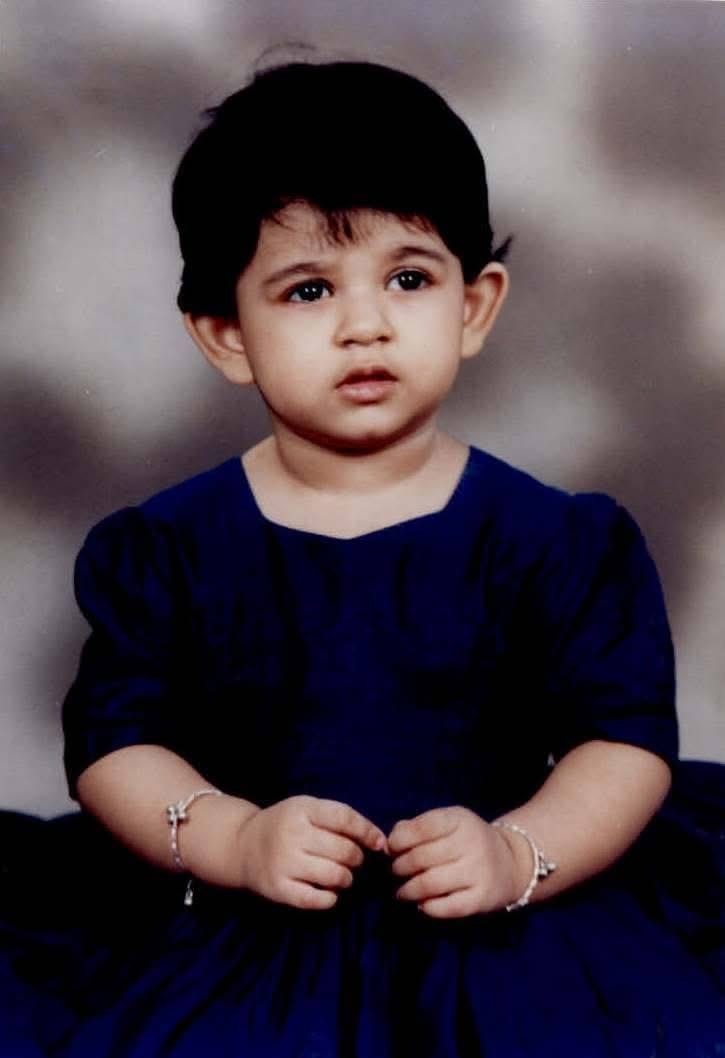
I used to be more wide-eyed and hopeful in teaching people how to pronounce my first name when I first came to the US, glad that no one would confuse it with the Bangla word for lotus, or see the first three letters and think “fart.” In college, even if I couldn’t teach them পদ্য fully, with all the correct emphases (I suppose if we’re really getting into it, it’s poathe-though but even then the oathe is wrong it should be shorter, less emphasized. poe-th-though???) I would at least say poe-though, without one soft d instead of the double soft d so at least the দ sound would come through even if the য ফলা didn’t. But then 1st June, 2018 happened. It was raining heavily in Wellesley, Massachusetts and I was sitting in a red and green sari, covered in stoles, inside a giant tent that had been patched for the commencement ceremony for the Class of 2018.
As part of the pre-graduation rituals we had the option to record our names for the announcer. Which, of course, I did. Then, during rehearsal, I went and wrote it down too in the list that the speaker for names between M and R had prepared. Poe-though. So, compared to how much anxiety I feel around the mispronunciation of my name on first days of classes, I felt very relaxed. They had this. As we arrived closer to the middle letters, our whole row stood up to go form a line by the stage. I was holding the edge of my sari up with my hands, praying that I had enough skill to walk in heels and not trip all over the stairs. The person ahead of me had their name announced and I was ready. My parents had flown in from Bangladesh. I had extended family and family friends and all the college friends from the last four years there. Everyone I’d made so many great memories with were present. Here I went, young Padya from Dhaka, Bangladesh about to have a bachelor’s degree from an esteemed liberal arts college 8,000 miles away from home.
“Pad-ya Paramita,” said the Dean into the mic.
I could feel my ears fuming and my eyes watering. Somehow I managed a smile for the camera and scurried back to my chair to sob into my hands, pretending I had something in my eye. I spent the rest of the event on my phone.
My parents didn’t really mind the mispronunciation because they didn’t know I had gone through the whole ordeal of telling them how to do it via multiple platforms. They hadn’t gone through four years at a predominantly white institution fighting to write an honors thesis and experiencing microaggressions from their own “friends” and departments. They were just happy they got to come see me walk that stage while I honestly can’t even remember what happened the rest of that day. What has stayed on my mind is the anxiety and frustration that day brought, that I couldn’t shake off my chest even when I went to visit campus six months later. Now, I don’t correct strangers and for people I will have to interact with regularly I introduce myself as Poe-doe and Poe-though and “It’s whatever, it really doesn’t matter, thank you for trying” depending on my mood, because I don’t want that gross feeling of graduation day ever again.
I continue to have name anxiety when I have to introduce myself to a new classroom or new group of people or a new individual even. I laugh it off when someone asks “how is it spelled?” when they don’t understand it. So of course, when I wrote a novel, when it came to the question of how it is that I want to present myself to the world, I decided to drop my first name.
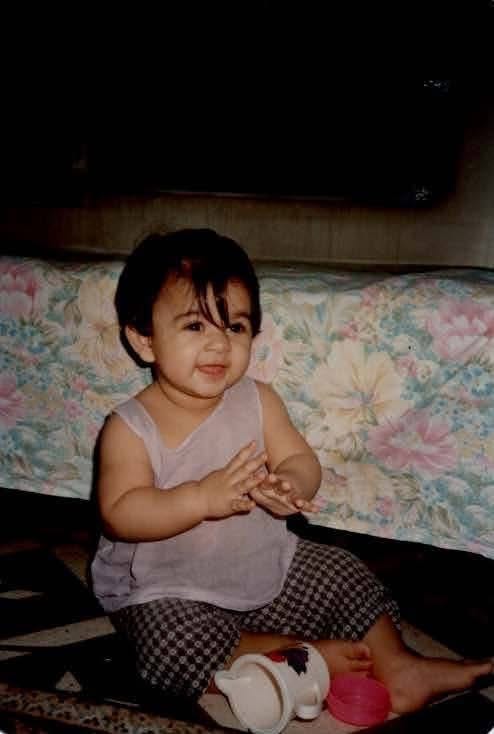
Don’t get me wrong, I haven’t dropped my first name from real life. I very much go by Padya and introduce myself to new people as Padya, and honestly don’t let people even use shortened versions (Pods or P or Paddy, which I hate when people say Patty, ew who is that) until they’ve got Padya down. But the issue with writing a book and sending it out into the world is that I will not get to correct every single person and hold their hand and guide their mouth (ew) as I tell them my name and eventually give up and let them say whatever. (If you’re someone I let say Poe-doe and get on with it, please don’t feel offended, I probably was just saving both of our times and myself some kind of pain—it is my most turned-to version).
I do love the idea that P. Paramita is this different person, new persona. It makes me think of performance—and being an author and having people read my writing is a version of performance, isn’t it? It’s a novel but I’m speaking to you through this story about food and Bangladeshi people and wrestling—all topics that are near and dear to me. I’m performing a version of this story for you that I think will entertain you, will make you think, will help you humanize immigrants, if you’re not someone who does that (hey, I can dream). As someone who is obsessed with control, and sending a book out into the world is something whose audience I can’t control, being P. Paramita is my way of making sure you’re getting a version of me I hope you won’t mispronounce.
I’m also telling a story in English. Colonialist language, one used to hurt people for centuries. It is a reclamation, even though the reason I became fluent in English in the first place was because I grew up in a Commonwealth country. Still, it can be hard to understand a lot of the stories I tell and not make a judgment call immediately if one doesn’t speak Bangla (or Banglish), or hasn’t lived this half-here half-there life. And I have accepted that. But in being P. Paramita, in trying my best to convey an experience, I hope Appetite touches on universal themes of loneliness and recognition and strikes cords with anyone, regardless of background.
It is quite fitting to play with names and personas when it comes to presenting a book about wrestling to the world. Wrestlers more often than not use ring names/stage names that sometimes are nods to their real names or cities, but also are completely irrelevant to their actual name. In Appetite, protagonist struggles with the fact that once she gets to know her favorite wrestler, the person behind the character, Jennifer Kaplan, is very different from her wrestling persona, Sierra Myst. It’s a part of her reckoning with the fact that she has put this character on a pedestal and become very excited about a larger-than-life superhero and not understood the fact that behind this character is a very human, very flawed person.
I also think of K-pop. Of Jin, the oldest member of BTS and his quote, “I don’t really want to show people that side of me. So I try my best to not show my darker side. I try hard to act more cheerful so I tend to separate Jin from Kim Seokjin.” He is someone who has openly stated that the version of him his fans get is different from who he is. It’s part of him being a performer, someone who wants his fans to see a side of him that gives them hope, makes them smile, and fills them with love, despite being an introvert when he’s not onstage or in front of cameras.
My book isn’t out yet, I haven’t done any events yet, and I haven’t really met people, at least in real life, who know me more as P. Paramita rather than Padya. I’d be curious of who I become then, if there are parts of me I keep within, beyond just my first name, the thing I’m so protective of. But my hope is that in all of this I don’t lose sight of Padya. Padya the kid who ran around playing with neighborhood kids in Dhanmondi, Dhaka, making a hole in the cap of a plastic bottle and squeezing water into my mouth while biking and feeling so entertained. Padya is the kid who would wait for my mother to return from work and do my homework while we sat by the TV and I absorbed everything that was happening in the soap operas she watched. Padya is the kid who watched my father’s face covered in shaving cream in the bathroom mirror and ask if he is drawing a picture on his face. I wear a chain with my name in Bangla every day. I’ve worn it since I came to the US. You may see it written as P. Paramita, but I’ll always be Padya.
Padya, I love you. I will never lose you.
Same situation happens with my nickname. I am called Mithu, Mithun, Mitu, Mitun, Mitul and Miton. Not to mention the name they call to troll me. I always respond because I know their intention is always good.